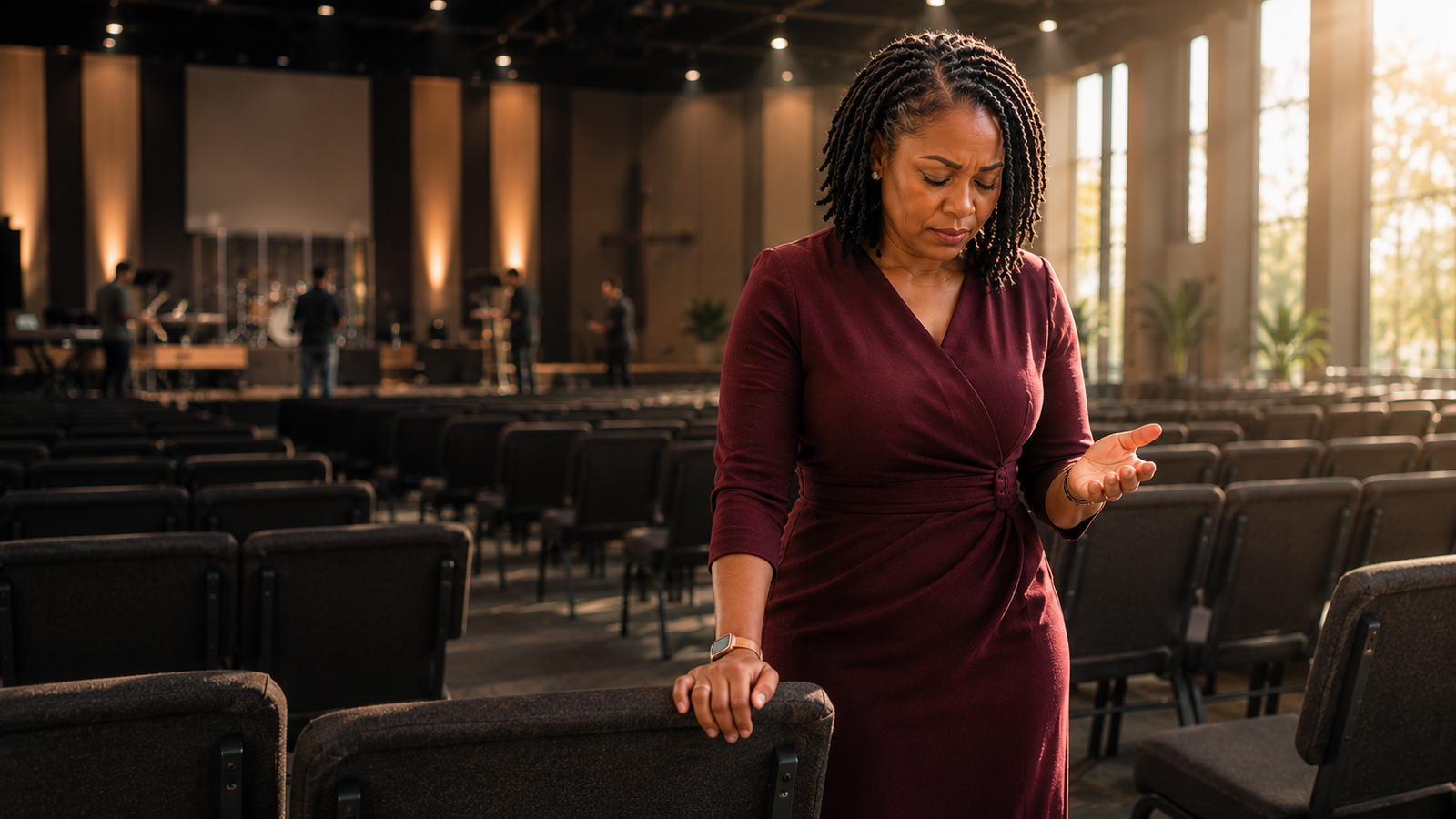
The Church does not need another generation that becomes highly skilled at discussing everything wrong with her while slowly losing the ability to pray for her. We live in a time when a sermon can be reviewed before the preacher reaches the car park, a ministry decision can become public conversation within minutes, and almost anyone with a phone can become a commentator on pastors, churches and Christian leaders. Some criticism is necessary. Serious wrongdoing should never be hidden behind words such as honour, submission or unity, and accountability should never be treated as rebellion simply because a leader is involved. Yet there is still a question worth bringing into the secret place: When I see weakness in the Church, does it only produce commentary in me, or does it also produce intercession?
Paul writes, “I exhort therefore, that, first of all, supplications, prayers, intercessions, and giving of thanks, be made for all men; For kings, and for all that are in authority…” (1 Timothy 2:1–2 KJV). The immediate context is broader than church leadership; Paul is calling believers to pray for all people, including those carrying positions of authority. Yet the New Testament also makes it abundantly clear that spiritual leaders needed prayer, churches prayed together, and believers were expected to carry one another before God. Today, therefore, we bring the Church, its leaders and its people to the altar, not because the Church is perfect, but because she belongs to Someone who is.
Never Forget Whose Church This Is
Jesus made an extraordinary declaration in Matthew 16:18: “I will build my church; and the gates of hell shall not prevail against it.” Those words, “my church,” should shape the way we think about the Body of Christ. The Church does not ultimately belong to pastors, denominations, founders, boards, movements or gifted personalities. Acts 20:28 speaks of “the church of God, which he hath purchased with his own blood.” Whatever weaknesses we may see in her human expression, the Church remains precious to Christ because He paid an immeasurable price for her.
This does not mean every organization carrying the word church represents Christ faithfully, nor does it mean everything done by Christian leaders deserves defence. It means we must learn to distinguish between the failures of human beings and the value Christ Himself places upon His Body. You may have encountered the Church at her weakest. You may have seen pride where there should have been humility, competition where there should have been love, or control where there should have been servant leadership. Yet the failures of people do not make the blood with which Christ purchased His Church less precious. We can desire correction without becoming cynical, pursue accountability without developing hatred, and acknowledge wounds without allowing those wounds to make us despise what Jesus still calls His own.
Loving The Church Does Not Require Blindness
There are women who carry genuine disappointment from Christian environments. Some have been treated poorly, manipulated, ignored or deeply disappointed by people they trusted spiritually. Prayer should never be used to silence such realities. If serious wrongdoing occurs, appropriate accountability matters, and where someone’s safety is involved, protecting people is more important than protecting an institution’s reputation.
At the same time, pain can slowly become a lens through which everything is interpreted. One person’s failure begins representing every pastor; one unhealthy church becomes evidence that all churches are corrupt; one disappointment becomes permission never to trust again. Healing allows us to become discerning without becoming permanently suspicious. I do not want to become so skilled at recognizing what is wrong with the Church that I lose the ability to see what Jesus is still doing within her. There are still faithful pastors, sincere believers, courageous missionaries, humble servants and congregations where people are genuinely encountering Christ and growing in His Word.
Leaders Are People Before They Are Titles
It is easy to see the microphone and forget the human being holding it. People hear Sunday’s sermon, but they do not necessarily see Monday’s decisions, Tuesday’s counselling, Wednesday’s crisis, Thursday’s administration or the unexpected phone call that somehow waits until 11:47 PM to announce itself. It is remarkably easy to redesign an entire church from the comfort of the congregation when you are not responsible for the budget, staff, counselling, building, difficult decisions, emergencies and the responsibility of caring for people through some of the hardest moments of their lives.
None of this places leaders beyond accountability. In fact, Scripture places serious responsibility upon those who teach. James 3:1 says, “My brethren, be not many masters, knowing that we shall receive the greater condemnation.” Spiritual responsibility should produce greater humility, not entitlement. Yet accountability and compassion are not enemies. A pastor can need correction and prayer at the same time. A leader can be responsible for poor decisions while still needing grace, wisdom and restoration. Spiritual titles do not remove human weakness, which is precisely why those carrying responsibility should have a place in our intercession.
Pray For Character As Much As Influence
Our prayers for ministries can easily become prayers for expansion: Lord, increase them. Open doors. Give them influence. Enlarge the ministry. There is nothing wrong with asking God to extend the reach of faithful ministry, but we should pray just as passionately for the character of the person standing on the platform. Influence without integrity eventually becomes dangerous because a gift can take someone into rooms that character is not yet strong enough to survive.
We should therefore pray that leaders remain humble when people celebrate them, truthful when dishonesty would be convenient, accountable when independence feels easier, and faithful to Christ when recognition becomes seductive. We should pray for wisdom concerning money, relationships, power and decisions; for courage to repent quickly when wrong; and for private lives that agree with public ministry. A large ministry without integrity is not revival. Numbers can tell us how many people attended, but they cannot tell us whether Christ is being formed in the people who came.
Pray That Truth Remains Truth
Paul charged Timothy, “Preach the word; be instant in season, out of season; reprove, rebuke, exhort with all longsuffering and doctrine” (2 Timothy 4:2 KJV), then warned that people would eventually “not endure sound doctrine” (verse 3). Every generation faces the temptation to reshape Scripture according to what is fashionable, comfortable or culturally acceptable. The Church must resist both extremes: changing truth to please people and presenting truth with such pride and harshness that our manner contradicts the Christ we claim to proclaim.
We need pastors and teachers who love Scripture enough to handle it faithfully, who refuse to build ministries around personalities, and who understand that creativity can help communicate the gospel but can never replace it. Christ must remain central, Scripture must remain authoritative, and the goal of preaching must be more than producing excitement. We need truth that enters Monday morning with us and forms the way we actually live.
Even Paul Asked People To Pray For Him
One of the shortest requests in Paul’s writings carries enormous weight: “Brethren, pray for us” (1 Thessalonians 5:25 KJV). The apostle who planted churches, endured persecution and carried extraordinary spiritual responsibility still wanted the prayers of ordinary believers. If Paul did not graduate beyond needing prayer, modern spiritual leaders certainly have not. Some pastors are tired. Some missionaries serve in difficult places with very little recognition. Some leaders are pouring into others while privately walking through their own seasons of pressure. Others are making decisions where every available option seems to carry consequences. We may never know everything they carry, and we do not need to know. We can simply pray that God strengthens them, protects their relationship with Him, gives them wisdom and surrounds them with people who love them enough to encourage them, pray for them and tell them the truth.
The Church Is Bigger Than The Platform
Our prayers must not become so focused on leaders that we forget the people they are called to serve. Ephesians 4:12 says ministry gifts are given “For the perfecting of the saints, for the work of the ministry, for the edifying of the body of Christ.” A healthy church is not simply one with an impressive preacher; it is a people increasingly becoming mature in Christ.
We should therefore pray for believers to develop hunger for Scripture, consistency in prayer, love for one another, compassion for the hurting, courage to share the gospel and lives marked by holiness and integrity. We should pray that congregations do not become audiences who evaluate ministry as consumers, but communities in which every believer understands that she or he has been called to follow Christ and serve. The goal is not to gather crowds around gifted personalities. The goal is Christ formed in His people.
We Do Not Need To Compete
Jesus prayed in John 17:21 “That they all may be one.” Biblical unity does not mean every congregation becomes identical or that doctrinal differences suddenly become meaningless, but surely it means we can refuse unnecessary competition. Churches are not rival businesses, pastors are not competing brands, and heaven is not maintaining a denominational league table to determine whose congregation finishes the year at number one.
When Christ is genuinely glorified somewhere else, we should be able to rejoice. When another congregation grows, we do not need to become insecure. When another ministry reaches people ours may never reach, we can thank God. There is enough darkness in the world without Christians spending their energy competing over who has the brightest lamp. The success of another faithful ministry does not diminish what God has called us to do.
Bring The Church To The Altar
Today, bring your local church before God. Carry its pastors, ministry workers and those who teach Scripture. Remember missionaries, congregations facing hardship, believers under pressure and leaders whose names you may never know. Pray for integrity where compromise has entered, restoration where there has been failure, healing where people have been wounded, courage where fear has silenced truth, humility where success has produced pride, and spiritual awakening where Christianity has become routine.
Above everything else, ask God to make Jesus visible again. Let our churches be known not merely for excellent programmes, impressive buildings, gifted speakers or large gatherings, but for people in whom Christ is increasingly being formed. Yesterday we surrendered what we are building. Today we remember that Jesus is building something far greater than any individual assignment: His Church. May He continually find women willing to carry before Him the people He purchased with His own blood.
Declarations
◆ The Church belongs to Jesus Christ, and I will carry His Body before God with love, truth and discernment.
◆ I pray for pastors and spiritual leaders to walk in humility, holiness, wisdom, courage and integrity.
◆ I declare that influence and growth will never become substitutes for godly character in the Church.
◆ I pray for those who teach Scripture to remain faithful to God’s Word and courageous in proclaiming truth with grace.
◆ I ask God to strengthen tired pastors, missionaries, ministers and church workers and renew them in their assignments.
◆ I pray for believers to grow in spiritual hunger, prayer, holiness, love, maturity and the knowledge of Christ.
◆ I reject unnecessary competition within the Body of Christ and choose to rejoice wherever Jesus is genuinely glorified.
◆ I pray for healing, justice and appropriate restoration wherever people have been wounded through failures within Christian environments.
◆ I believe Jesus is still building His Church, and human failure will not cause me to become cynical about what belongs to Him.
◆ I declare that Christ will increasingly be formed in His people and that His Church will faithfully reveal Him to this generation.
My Prayer For You
May God give you His heart for the Church, heal disappointment without removing discernment, and make you a woman who responds to both the beauty and brokenness of Christ’s Body with truth, love and faithful intercession.