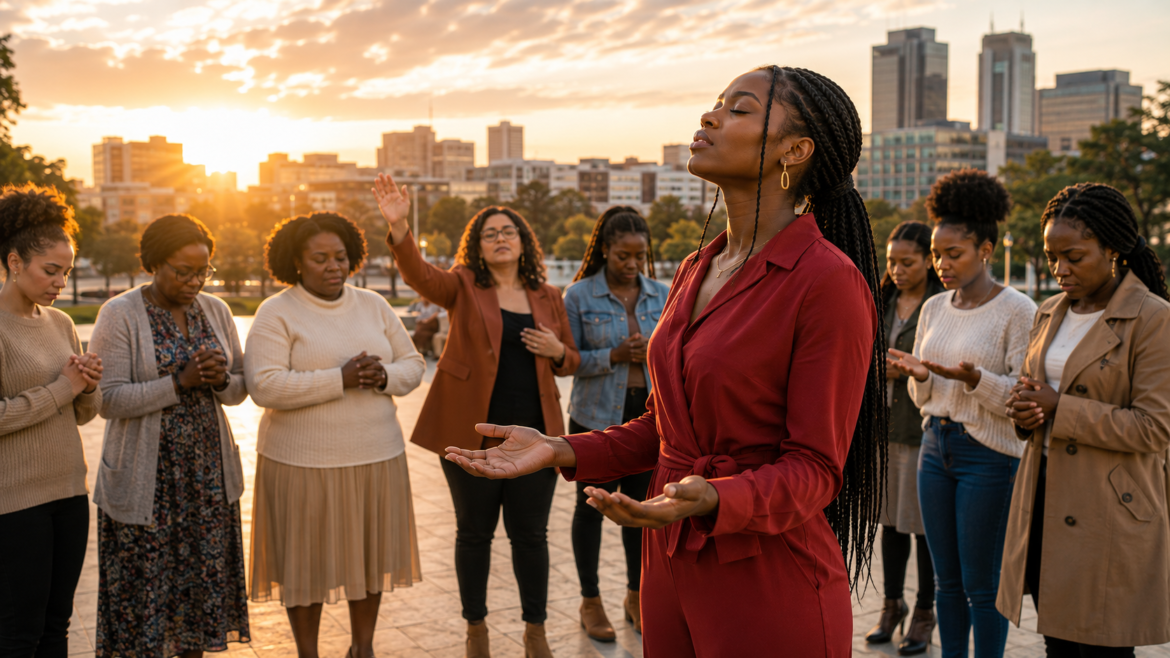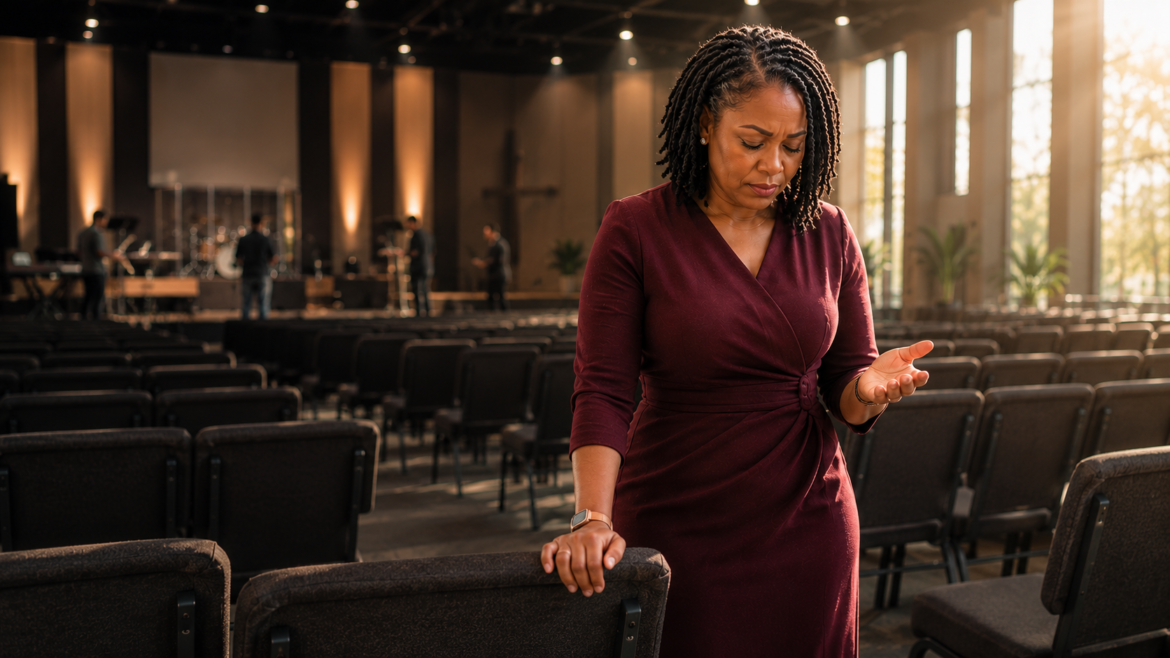
Tomorrow morning there will be no Day 31. But there will still be a secret place. For thirty mornings, we have had somewhere specific to go together. There has been a Scripture, a focus, a short teaching and a direction for prayer. At 5:00 AM, while much of the world was still negotiating with its alarm clock, women were intentionally giving God the first part of the day. Some mornings may have felt powerful. Others may have required determination just to get out of bed. There were probably mornings when the spirit was willing and the blanket seemed to have developed a ministry of its own. Yet morning after morning, we returned.
Now September 30 has arrived, and the most important question of Prayer Awakening is not whether we completed thirty days. The question is what these thirty days have awakened in us that will still be alive when the programme is over. I do not want to need a campaign before I seek God. I do not want prayer to become something I practise intensely for thirty days and then gradually place back on the shelf until another programme reminds me that the secret place exists. I want communion with God to become part of the architecture of my life, something so deeply woven into who I am that when the programme disappears, the relationship remains.
That is why the final Scripture of Prayer Awakening is so appropriate:
“The fire shall ever be burning upon the altar; it shall never go out.” — Leviticus 6:13 KJV
The command in Leviticus concerned Israel’s altar under the Old Covenant. We are not being instructed to reproduce the Levitical altar physically. Yet the picture placed before us is powerful: the fire was not supposed to be temporary. It was meant to continue. And perhaps that is the word we need most on Day 30. Not excitement. Not conclusion. Continuation.
God Sent The Fire, But The Altar Had To Be Tended
There is something remarkable when we read Leviticus alongside the events surrounding the beginning of Israel’s priestly ministry. Leviticus 9:24 says: “And there came a fire out from before the LORD, and consumed upon the altar the burnt offering and the fat…” The fire came from God. Yet in Leviticus 6, the priests were given responsibility concerning the continuing fire. Verse 12 says: “And the fire upon the altar shall be burning in it; it shall not be put out: and the priest shall burn wood on it every morning…” God supplied what human beings could not manufacture, yet human beings were given responsibility to steward what God had supplied.
There is a principle here that reaches deeply into our spiritual lives. We cannot manufacture the Holy Spirit. We cannot manipulate the presence of God. We cannot manufacture genuine spiritual life by human effort. Salvation is grace. Access to the Father is through Christ. The Spirit is God’s gift. Yet grace does not remove stewardship. I cannot create God’s presence, but I can make room to seek Him. I cannot manufacture spiritual hunger, but when hunger awakens, I can protect what feeds it. I cannot make God speak according to my timetable, but I can open His Word and give Him my attention. I cannot produce spiritual transformation through willpower, but I can respond when the Holy Spirit convicts, teaches, leads and corrects me.
God gives fire. We tend the altar.
The Secret Place Is A Relationship, Not A Streak
This is where we must be careful. After thirty consecutive mornings, it would be easy to reduce everything we have learned to discipline. Discipline matters. Anyone who has ever decided to wake early knows that good intentions do not automatically remove a warm blanket. But Prayer Awakening was never ultimately about proving that women can wake up at 5:00 AM for thirty days.
We were returning to Someone. Jesus said:
“But thou, when thou prayest, enter into thy closet, and when thou hast shut thy door, pray to thy Father which is in secret…” — Matthew 6:6 KJV
Notice the heart of the secret place. “Thy Father.” We are not maintaining a religious attendance record. We are cultivating communion with our Father. I do not want to become proud because I prayed yesterday. I want to know Him today. I do not want to measure spirituality merely by how many consecutive mornings I completed. I want my heart to remain responsive to God.
There is a difference between protecting a routine and protecting a relationship. The routine exists to serve the relationship.
Tomorrow Morning Will Reveal Something
Imagine tomorrow. October 1. There is no Day 31 article waiting for you. Nobody is introducing the next phase. Nobody is saying, “Tomorrow we will be praying about…” Your alarm sounds. You reach for the phone to switch it off, and there is a notification. You check it quickly. Then another message appears. Then WhatsApp. Then perhaps you remember something you wanted to search for. Suddenly it is 5:38 AM and you somehow know what someone you have not spoken to since 2019 ate for dinner last night.
The secret place did not disappear. Your attention simply went somewhere else. Our phones are not evil, but they reveal something important about modern life: attention must be protected. Whatever consistently receives the first attention of our hearts eventually trains our appetites. There have been times when I intended to pray “in a few minutes,” only to discover that those few minutes had somehow travelled into tomorrow. Distraction rarely introduces itself by saying, “Hello, I have come to destroy your prayer life.” Usually it arrives looking harmless.
Just one message. One video. One task. One thing to finish first. Then the day begins moving, responsibilities multiply, and what mattered most becomes what we hope to fit somewhere into whatever time remains. The woman who wants to keep the fire burning learns that attention is precious. DO NOT WORSHIP 5:00 AM, BUT DO NOT LOSE WHAT IT TAUGHT YOU For thirty days, Prayer Awakening has deliberately taken place from 5:00–5:30 AM SAST. There is beauty in giving God the first part of our day, and our campaign Scripture has reminded us:
“My voice shalt thou hear in the morning, O LORD; in the morning will I direct my prayer unto thee, and will look up.” — Psalm 5:3 KJV
But 5:00 AM is not a New Testament commandment. Some women may continue at exactly that time after September, and that may become a wonderful lifelong rhythm. Another woman may work shifts. Another may have an unusual study schedule. Another may have responsibilities that require a different arrangement. The point is not to worship the clock. The point is to preserve priority. Do not preserve 5:00 AM while losing relationship, but neither use the language of relationship as an excuse for having no discipline.
Love makes room. If something matters to us, eventually our schedule reveals it.
Some Mornings Will Feel Ordinary
This may be one of the most important truths to carry into October. Not every prayer time will feel extraordinary. Some mornings you may open your Bible and feel deeply aware of God’s presence. A passage may seem unusually alive. Prayer may flow effortlessly. Another morning you may feel tired. The room will look exactly like the room. The chair will remain stubbornly a chair. There may be no goosebumps, tears or dramatic moment. God has not disappeared. Some mornings I may come before Him overflowing with words. On another morning I may arrive tired and simply know that I need Him. I do not want either morning to determine whether He receives my attention.
Mature communion cannot depend entirely upon spiritual excitement. This is where many fires quietly begin to weaken. We mistake a lack of emotion for a lack of God. But faithfulness says: He is worthy when I feel much, and He is worthy when I feel little.
Fireworks Are Not The Same As Fire
Fireworks are impressive. They explode. Everybody looks up. There is noise, light and excitement. Then, a few seconds later, they are gone. A fire that keeps a home warm is different. It may be less spectacular, but somebody tends it. Fuel is added. Attention is given. The purpose is not a few seconds of amazement but sustained warmth.
I think sometimes we want spiritual fireworks when God is forming people who know how to tend a fire. A conference can become fireworks. A powerful prayer meeting can become fireworks. Even thirty extraordinary mornings can become fireworks if nothing continues afterward. The question is not simply, “Did something happen in September?” The deeper question is: “What is still burning in December?”
Remove Yesterday’S Ashes
Leviticus 6 contains another detail that becomes deeply meaningful when we consider the continuing fire. The priest had responsibility concerning the ashes left by the burnt offering. Yesterday’s fire produced today’s ashes. Ashes are evidence that something burned. But ashes cannot become today’s flame. There is a danger in spiritual life where yesterday’s testimony becomes a substitute for today’s communion. We can spend years talking about a season when we were hungry for God, when prayer was strong, when Scripture came alive, when we experienced His presence deeply.
Those memories are precious. Remembering God’s faithfulness strengthens us. But yesterday’s encounter cannot replace today’s relationship. I can thank God for yesterday’s fire without trying to warm myself forever with yesterday’s ashes. September will eventually become a testimony. October needs fresh communion. November needs fresh communion. December needs fresh communion. The coming years will need fresh communion. I want memories of what God did yesterday to make me grateful, but I never want yesterday’s encounter to become an excuse for having no fresh communion with Him today.
Add Wood Every Morning
Leviticus 6:12 says: “…the priest shall burn wood on it every morning…” Again, we must not turn Old Testament altar instructions into a mystical formula for Christians. But the picture of daily attention is difficult to miss. Fire that continues receives attention. For us, there are rhythms that keep bringing our hearts before God: Scripture, prayer, worship, thanksgiving, obedience, quietness before Him and fellowship with other believers.
These are not pieces of wood we use to purchase God’s presence. They are ways we continually position our hearts toward the God who has already brought us near through Christ. I have discovered that it is much easier to become spiritually excited than spiritually consistent. Excitement can begin something. Consistency allows what began to become part of us.
That is why small decisions matter. Opening the Bible when nobody reminds you. Praying when nobody is leading you. Turning your heart toward God before making a decision. Stopping during an anxious moment and praying instead of allowing fear to run unchecked through your mind. Thanking God while doing ordinary work. Praying quietly when someone unexpectedly comes to mind. These things may never look dramatic. But neither does adding wood to a fire. Yet the fire continues.
If You Miss A Morning, Return
Let us make this practical. Imagine you continue beautifully after September. October 1, you pray. October 2, you pray. The rhythm continues. Then one morning you oversleep. Perhaps the previous night was difficult. Perhaps you forgot to set the alarm. Perhaps you simply made a poor choice. Now what? One of the enemy’s simplest strategies is to turn interruption into abandonment.
You missed one morning, so guilt whispers that you have failed. Then because you feel guilty, you avoid prayer the next morning. Soon a small interruption has become a long absence. Proverbs 24:16 says: “For a just man falleth seven times, and riseth up again…” Consistency does not mean you will never stumble. Sometimes consistency means becoming very good at returning quickly. If you miss the altar, return. No dramatic ceremony is necessary. You do not need to wait for Monday. You certainly do not need to wait for January. God does not require a new month, a new notebook, three fresh highlighters and a motivational Christian water bottle before you can come back.
Return. The Father you met in the secret place has not moved.
Protect Your Altar From Unnecessary Noise
On Day 3 we learned to shut the door. Thirty days later, perhaps we understand that instruction differently. The door is not only about finding a physical room. It is about learning that everything demanding access to us does not deserve unlimited access. Every message does not require an immediate response. Every online argument does not require our contribution. Every person’s crisis does not automatically become our assignment. Every opinion does not need to enter our minds. If we continually allow everybody and everything unrestricted access to our attention, eventually we will discover that we have very little attention left for God.
I want to become a woman who can be present for people without becoming absent from God. The secret place teaches us where our strength comes from. Jesus Himself withdrew to pray. Luke 5:16 says: “And he withdrew himself into the wilderness, and prayed.” If Jesus deliberately withdrew, we should not imagine that constant availability is proof of spirituality.
Sometimes the most spiritual thing you can do is close the door. WHO ARE YOU WHEN NOBODY IS WATCHING? The secret place has something the public platform does not have: There is no audience to impress. A woman can develop a public Christian identity. She can post Scriptures, attend gatherings, use spiritual language and become known as someone who loves God.
But the altar asks a quieter question: Who are you with God when nobody is watching? That is why the secret place is so formative. There is no applause there. No likes. No microphone. No need to appear deep. You can be honest. You can tell God when you are tired. You can bring questions. You can worship. You can repent. You can sit quietly with Scripture. You can pray for people who will never know you prayed for them. What happens privately with God gradually forms what can safely be trusted publicly.
I would rather have a deep root that nobody sees than impressive leaves with nothing underneath them.
Eventually The Secret Place Begins To Travel With You
There should be a dedicated place and rhythm for prayer, but something beautiful happens as communion deepens: awareness of God begins entering ordinary life. You may find yourself talking to Him while driving. A Scripture comes to mind while you are working. Someone’s name enters your heart while you are preparing food, and instead of dismissing it, you pray.
Before answering an important message, you pause. Before making a decision, you acknowledge God. An anxious thought comes, and rather than allowing it to build an entire house in your imagination, you turn it into prayer. This is where prayer stops being merely something scheduled and begins becoming part of how we live. The secret place has not disappeared. It has formed the woman who entered it.
Look At What God Has Been Forming
Thirty mornings ago, the journey began with a simple cry: Awaken me. We asked God to restore the altar. Then the prayer became: Draw me deeper. We learned that prayer is more than asking. We sought His face, became still, listened, prayed His Word and learned faithfulness beyond emotion. Then: Establish me. We learned to come boldly through Christ, depend upon the Holy Spirit, remain spiritually watchful, understand our position in Christ, stand in God’s armour, believe Him and carry deeper burdens in prayer.
Then something changed. Our prayers began moving beyond ourselves. Use me. We stood in the gap. We carried other people. We prayed for the next generation, our homes, what we are building, the Church and its leaders, our communities, cities and nations. The secret place enlarged our hearts. Finally came the cry: Send me with the fire. Yesterday we prayed for revival. Today we realize that revival cannot simply be something we admire, attend or discuss.
We must carry what God has awakened. This is the journey: Awaken the Woman. Rekindle the Altar. Transform a Generation. The order matters. God awakens women. Their altars begin burning. Then awakened women enter ordinary life carrying His presence, truth, love, compassion and prayer into their generation.
Thirty Teachings Were Never The Goal
There is one final thing I want us to remember. Throughout Prayer Awakening, one principle has governed these mornings: The teaching introduces the altar. It must never replace the altar. We did not gather for thirty mornings simply to become more knowledgeable about prayer. If I finish September with thirty pages of notes about prayer but no continuing life of prayer, I have collected matches without keeping the fire.
The teaching was meant to light something. Prayer remained the heart. And now that the teaching series is ending, the altar remains. This may actually be the moment when we discover whether we understood what the teaching was for.
Tomorrow There Is No Day 31
Tomorrow morning, there will be no Day 31. But the Father will still be there. The Word will still be true. The Holy Spirit will still be our Helper. The throne of grace will still be accessible through Jesus Christ. The Shepherd will still speak. The secret place will still exist. And now you know the way back. Perhaps that is the greatest thing these thirty days could ever have accomplished.
Not that you can say: “I completed Prayer Awakening.” But that something deeper has become true: “I found the secret place again.” Psalm 5:3 was our Scripture at the beginning: “My voice shalt thou hear in the morning, O LORD; in the morning will I direct my prayer unto thee, and will look up.” Notice that David does not say, “My voice You heard once.” There is expectation in his words. “My voice shalt thou hear.” Tomorrow too. Next week too. When life is beautiful. When life becomes difficult. When prayers are answered quickly. When answers take longer than expected. When you feel spiritually strong. When you need the Holy Spirit to help your weakness.
The voice continues because the relationship continues. I do not know what every woman will face after September. One will return to lectures. Another will continue building a business. Another will walk into an office. Another will serve in ministry. Another will care for people at home. Another will enter a season she did not anticipate. Another may still be trying to understand what her next season looks like.
But every one of us can carry this: There is a secret place. And when life becomes noisy, we know where to return. When hunger grows weak, we know where to return. When fear rises, we know where to return. When God answers spectacularly, we know where to return with thanksgiving. When we do not understand, we know where to return. The altar is no longer merely the place we visit because a programme told us to come.
It has become part of the rhythm of our lives. September is ending. The secret place is not.
Declarations
◆ My communion with God will continue beyond Prayer Awakening, and the secret place will remain a treasured part of my life.
◆ I receive grace to steward the spiritual hunger God has awakened in me and to protect my attention from distractions that continually pull me away from His presence.
◆ I will not live on yesterday’s encounters alone; I will remain hungry for fresh communion with God through His Word, prayer and fellowship with Him.
◆ My relationship with God will not depend upon emotion, convenience or a programme, but will continue through seasons of excitement and ordinary faithfulness alike.
◆ When weakness or inconsistency comes, I will refuse condemnation and return quickly to the Father through Jesus Christ.
◆ I will protect the secret place without turning spiritual discipline into legalism, remembering that the purpose of the rhythm is communion with God.
◆ Prayer will increasingly shape my decisions, relationships, work, studies, service, responsibilities and the ordinary moments of my life.
◆ The fire God has awakened in me will produce character, obedience, compassion, spiritual sensitivity and a heart enlarged to carry others in prayer.
◆ I will carry God’s presence beyond the prayer gathering into my home, workplace, campus, business, ministry, community and wherever He positions me.
◆ What God has awakened through these thirty days will not end with September; by His grace, my life will continue to testify that my altar is burning again.
My Prayer For You
May the God who awakened your hunger give you grace to protect it. May October find you praying, the months ahead find you still hungry, and the years ahead find you still returning to the secret place. May what began as thirty mornings become the rhythm of a life lived in communion with God. September may be ending. The secret place is not. And may the testimony remain: MY ALTAR IS BURNING AGAIN.